
Isle Royale National Park is the most remote wilderness destination in the National Park system, accessible only by ferry or seaplane and requiring overnight permits for all backcountry stays. Located in Lake Superior’s northwest corner, this roadless archipelago rewards the journey with wolf and moose research opportunities, 165 miles of rugged hiking trails, and a solitude rare among America’s protected lands.
The park reopened for its 2026 season on April 16, with ferry service now running through late September. Getting there demands advance planning: the Voyageur II operates its circuit around the island May 9 through September 24, while the Ranger III schedule becomes available each late winter. Seaplanes offer faster access but book quickly during peak summer months.
What sets Isle Royale apart is its commitment to genuine wilderness experience. You won’t find road access, cell service, or supply stores once you arrive. Every visitor staying overnight needs a permit, whether you’re camping in designated campgrounds (small party permits for groups of one to six) or venturing into off-trail camping zones that require separate authorization. The logistics filter out casual tourists and create an environment where paddlers, backpackers, and wildlife enthusiasts can immerse themselves in backcountry exploration without the crowds found at more accessible parks.
While this guide focuses on a distinctly remote Michigan wilderness, those seeking closer-to-home outdoor experiences might explore recreation in New Westminster for more accessible adventures. But if you’re ready for the planning effort Isle Royale demands, you’ll discover one of North America’s most pristine island ecosystems.
Why Visit Isle Royale National Park
Isle Royale National Park stands apart as one of America’s most challenging destinations to reach, and that’s precisely its draw. This roadless archipelago in Lake Superior, accessible only by ferry or seaplane, receives fewer visitors in an entire year than Yellowstone sees in a single summer day. What you get for that commitment is something increasingly rare: genuine wilderness where the only sounds are waves, wind, and wolves.
The island harbors the longest-running predator-prey study in the world, tracking its famous wolf and moose populations across decades. Hiking here means encountering landscapes these animals shape daily, from moose-browsed shorelines to wolf tracks crossing your trail. You won’t find that dynamic in parks where wildlife viewing happens from roadside pullouts.
For backpackers, Isle Royale offers over 165 miles of trails threading through boreal forest, rocky ridges, and Lake Superior coastline. Multi-day routes let you string together campsites where you might be the only party for miles, sleeping to the rhythm of waves instead of highway traffic. Sea kayakers can explore dozens of smaller islands and protected bays, paddling routes that weave between historic lighthouses and remnants of 19th-century copper mines.
The park’s isolation filters visitors naturally. Those who make the journey tend to be here for the right reasons: to carry a pack into true backcountry, to paddle waters where cell service doesn’t exist, to experience what wilderness actually means. If you’re seeking an outdoor adventure that demands preparation and rewards it with solitude most national parks can no longer provide, Isle Royale delivers.
Top Areas and Attractions in Isle Royale
1. Rock Harbor and Windigo: Gateway Communities
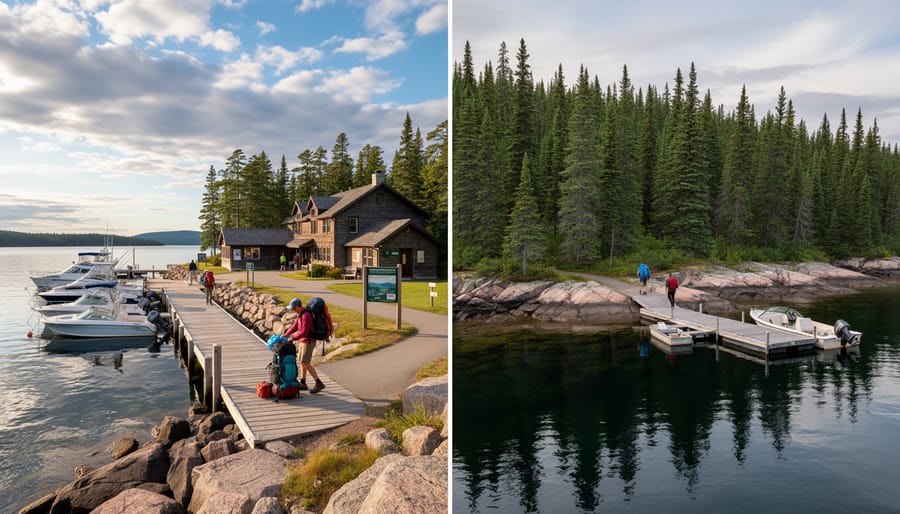
Rock Harbor and Windigo sit at opposite ends of Isle Royale, and choosing between them shapes your entire island experience. Rock Harbor, on the northeastern shore, serves as the park’s primary hub. Here you’ll find the main visitor center, a small camp store for last-minute supplies, lodge accommodations, and the historic Rock Harbor Lighthouse perched on a rocky point just a short walk from the dock. Most ferries arrive here, including the Ranger III from Houghton, making it the natural starting point for first-time visitors or those planning shorter trips. The area offers well-maintained day-hike trails like Scoville Point and Stoll Trail, plus easy access to Greenstone Ridge Trail for multi-day backpackers. Expect more foot traffic and ranger presence.
Windigo, tucked into the southwestern corner near Grace Island, presents a quieter alternative. The visitor center here is smaller and the amenities minimal, but that’s precisely the appeal for those seeking immediate wilderness immersion. Ferries from Grand Portage, Minnesota drop visitors at Windigo, positioning you for westward routes along Greenstone Ridge or the challenging Minong Ridge Trail. The surrounding forest feels wilder from the moment you step off the boat, with fewer hikers and a more remote atmosphere.
Choose Rock Harbor if you want infrastructure, guided programs, and the option to ease into backcountry hiking. Pick Windigo if solitude matters more than services and you’re ready to shoulder your pack and disappear into the forest.
2. Greenstone Ridge Trail
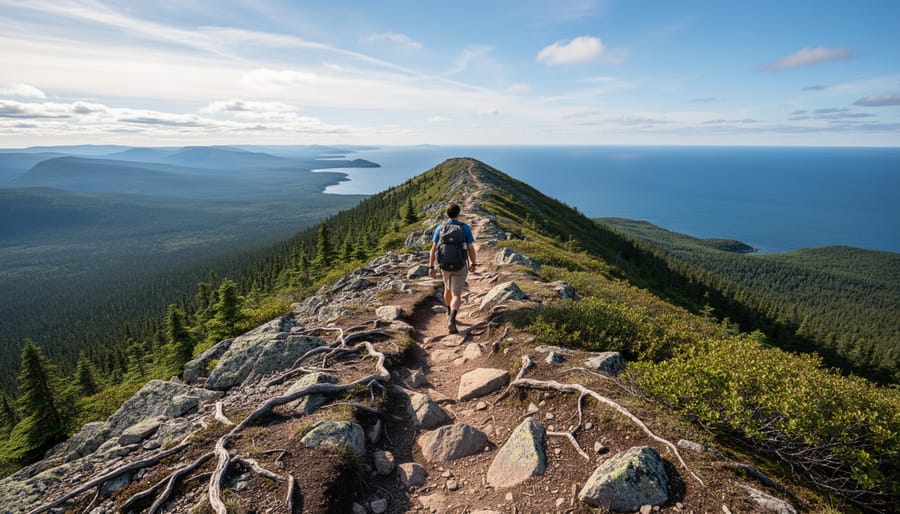
The Greenstone Ridge Trail stakes its claim as Isle Royale’s marquee backcountry route, stretching roughly 40 miles along the island’s rocky spine from Windigo on the southwest end to Lookout Louise near Rock Harbor. This ridge-top traverse delivers what most backpackers come for: sweeping panoramas of Lake Superior’s cobalt waters on both sides, the kind of wilderness solitude that’s increasingly rare in national parks, and a legitimate multi-day challenge that tests your self-sufficiency.
Most hikers tackle Greenstone Ridge in four to five days, though strong parties can push through in three. The trail itself rates as moderately difficult, steady elevation changes rather than brutal climbs, but rocky footing and exposed sections demand attention. You’ll gain and lose roughly 2,000 feet cumulatively as the ridge undulates.
Campgrounds sit spaced along the route at intervals that let you customize your pace: West Chickenbone, East Chickenbone, Hatchet Lake, and several others provide tent sites and three-sided shelters on a first-come basis (your overnight permit reserves your dates, not specific sites). Water sources appear regularly, though you’ll need to treat everything.
What sets this hike apart is the high-exposure hiking without technical scrambling. You’re walking the island’s backbone with Lake Superior stretching to the horizon in both directions, often entirely alone for hours. Early mornings bring moose sightings in the boggy areas between ridges, and the absence of roads or cell service creates a wilderness immersion that justifies the ferry ride to get here.
3. Isle Royale’s Coastal Paddling Routes
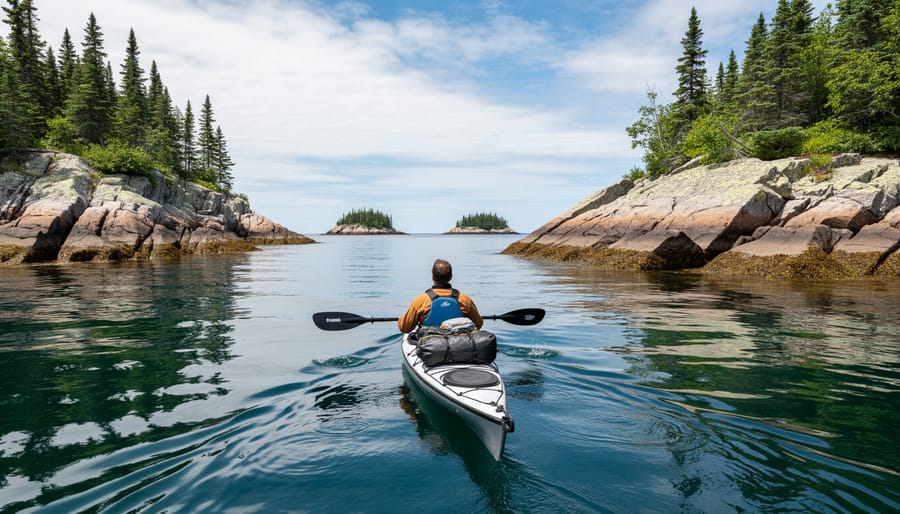
Paddling Isle Royale’s coastline opens up a dimension of the park that hikers never see. The archipelago’s 450 miles of shoreline, including the main island and surrounding islets, offer protected bays, rock gardens, and island-hopping routes that let you glide past cliff faces and beaches inaccessible by trail. You’ll have Lake Superior to yourself most days, with chances to spot moose wading in coves and nesting loons on quiet mornings.
Most kayakers base themselves at Rock Harbor or Windigo and take day trips along nearby coastline segments, but experienced paddlers can plan multi-day routes linking dock campsites and shoreline campgrounds. Five Finger Bay near Rock Harbor provides sheltered water perfect for beginners, while the outer islands demand solid open-water skills and weather judgment. You can paddle to historic lighthouses, explore narrow channels between islands, and beach your kayak on cobblestone shores where no trails reach.
The park doesn’t rent kayaks, so you’ll need to bring your own via ferry (most services accommodate boats for a fee, though space is limited, reserve early). Dock camping permits let you tie up overnight at designated sites, though availability fills quickly during summer. Paddling reveals Isle Royale’s wilderness from water level, where the scale of Superior and the remoteness of the archipelago become visceral in ways hiking can’t match.
4. Minong Ridge Trail
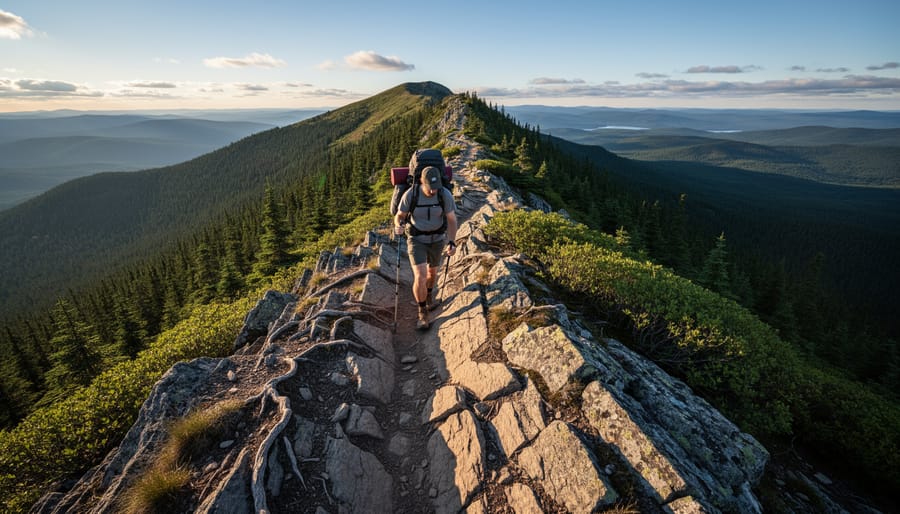
The Minong Ridge Trail represents Isle Royale’s ultimate test for seasoned backpackers. This 28-mile route traverses the island’s north shore, offering a stark contrast to the well-maintained Greenstone Ridge. Expect relentless climbs, steep descents, rocky scrambles, and sections where the tread nearly disappears into wilderness. The trail demands excellent navigation skills, sturdy ankles, and realistic mileage expectations, many hikers average just 6-8 miles per day compared to 10-12 on easier routes.
Who should attempt it? Experienced backpackers comfortable with uneven terrain, carrying full wilderness gear, and prepared for self-reliance. This isn’t a first-time Isle Royale route. The trail sees a fraction of Greenstone’s traffic, meaning you might go days without encountering another soul.
The rewards justify the effort. You’ll experience Isle Royale’s rawest character: moose sightings in secluded inland lakes, pristine campsites overlooking Lake Superior’s north shore, and the satisfaction of completing one of the park’s most demanding trails. The solitude feels absolute. Views stretch across Superior’s open water without another human in sight, and evening campfires crackle in near-total silence. For backpackers seeking genuine wilderness challenge and isolation, Minong Ridge delivers exactly what Isle Royale promises at its most uncompromising.
5. Scoville Point and Stoll Trail
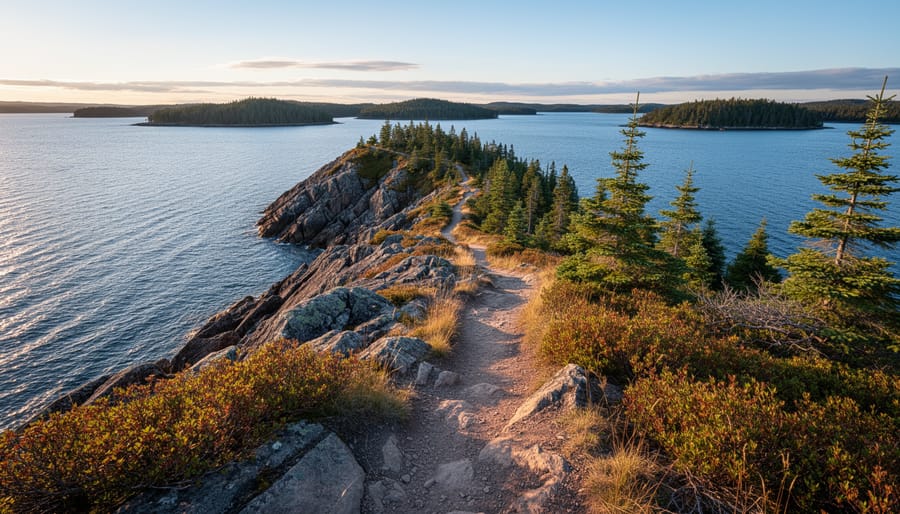
If you’re arriving at Rock Harbor with just a few hours before your return ferry or want to sample Isle Royale’s trails without committing to a multi-day trek, Scoville Point and Stoll Trail deliver immediate payoff with minimal effort. These short loops near the Rock Harbor dock showcase the island’s rocky Lake Superior shoreline, boreal forest character, and wildlife potential in compact, manageable distances, perfect for stretching your legs after the boat ride or making the most of a brief layover.
The Scoville Point loop runs roughly four miles from the visitor center, winding through dense spruce-fir forest before opening onto dramatic granite ledges jutting into Lake Superior. You’ll walk past small inland lakes, cross low ridges, and emerge at the point itself, where the views sweep across the harbor entrance and out to the open lake. The trail is well-maintained and relatively flat, making it accessible for most fitness levels. Early morning or late afternoon hikes often reward you with moose sightings in the wetlands along the route, and the exposed bedrock at the point is ideal for a rest break with panoramic water views.
Stoll Trail offers an even shorter option, about two miles round-trip, following the shoreline east from Rock Harbor. This mostly level path hugs the coast, passing quiet coves and offering frequent lake overlooks through the trees. It’s the easiest introduction to Isle Royale’s landscape and a solid choice if you’re testing your gear, traveling with young kids, or simply want a quick taste of the island’s solitude without venturing far from services. Both trails give you a genuine wilderness experience in a timeframe that fits ferry schedules, proving you don’t need a week-long expedition to connect with what makes this park special.
6. Backcountry Campgrounds and Shelters
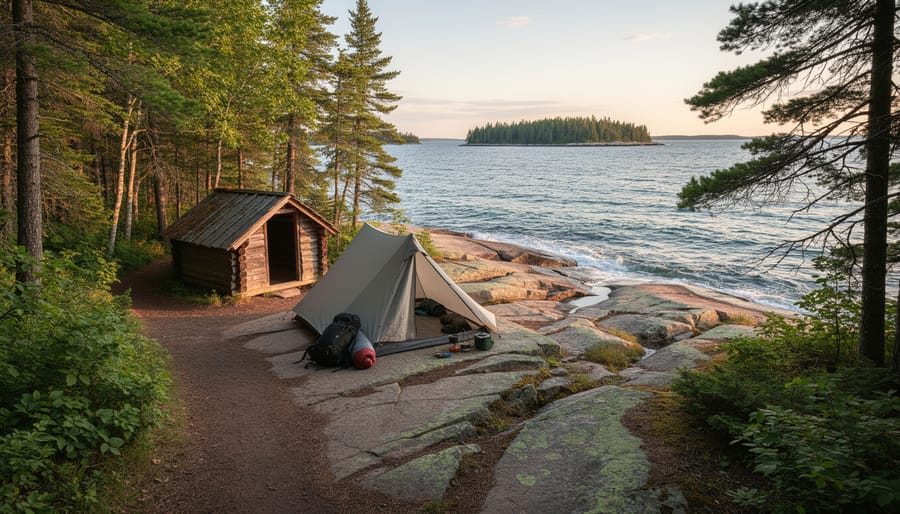
Isle Royale’s backcountry camping infrastructure strikes a deliberate balance between basic accessibility and genuine wilderness experience. The island hosts 36 designated campgrounds scattered along its trails and shoreline, ranging from popular hub sites near Rock Harbor and Windigo to remote single-site locations days into the backcountry. Most campgrounds offer individual tent sites plus distinctive three-sided Adirondack-style shelters that sleep four to six people on wooden platforms, first-come accommodations that provide wind protection but no privacy or insulation.
Facilities remain intentionally minimal. You’ll find pit toilets at established campgrounds, group cooking areas with fire rings, and designated tent pads, but nothing more. No running water, no electricity, no trash collection, you pack out everything you bring in. Water sources require treatment, and you’re responsible for proper food storage using provided poles and cables at most sites.
Dock camping adds a unique option for paddlers and boaters. Several campgrounds include dock access, letting you tie up for the night without hauling gear inland, though you’ll still need an overnight permit whether sleeping on land or aboard your vessel at anchor. This flexibility appeals to sea kayakers circumnavigating the island or sailors exploring the archipelago.
The campground distribution shapes your itinerary. Sites cluster more densely at the island’s ends, with longer gaps between options along remote stretches of Minong Ridge and the north shore. Reserve your permit knowing that weather, fitness, or wildlife encounters might alter your planned stops.
7. Historic Lighthouses and Copper Mining Sites
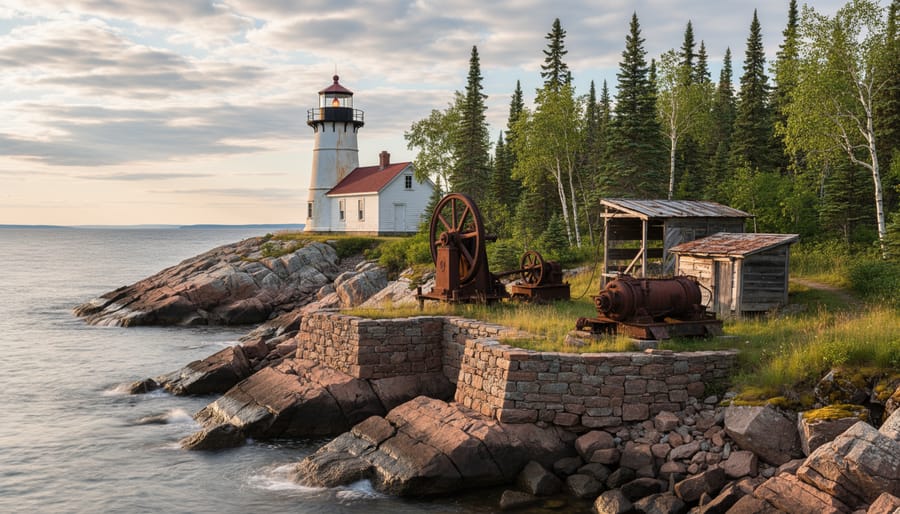
Isle Royale’s wilderness character obscures a surprisingly rich industrial and maritime past. The island witnessed a 19th-century copper mining boom that brought thousands of workers before the isolated location and difficult extraction made operations unsustainable. Today, weathered mine shafts, rock piles, and rusted equipment dot the landscape, particularly around Minong Mine near McCargoe Cove and the Siskiwit Mine complex. These remnants tell stories of ambition and hardship in one of North America’s most remote outposts.
Rock Harbor Lighthouse, perched on a rocky point near the harbor entrance, stands as the island’s most recognizable historic structure. Built in 1855, the white tower guided vessels through treacherous waters until operations ceased in 1879. Rangers now offer tours during summer months, and the short trail from Rock Harbor makes it an accessible half-day excursion.
The Edison Fishery near Rock Harbor preserves the commercial fishing heritage that sustained families after mining collapsed. Interpretive displays explain gill-netting techniques and the lake trout industry that thrived before lamprey invasions decimated fish populations in the mid-20th century.
These historic sites ground your wilderness experience in human context. Walking past a collapsed mine entrance or touring the lighthouse adds depth to the moose tracks and ridge-top vistas, reminding you that solitude here is relatively new.
Getting to Isle Royale: Access and Transportation
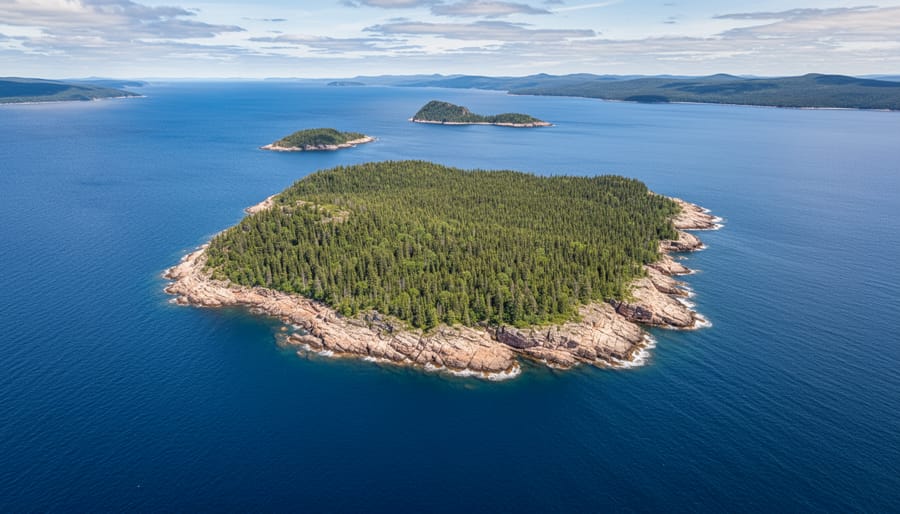
Reaching Isle Royale requires advance planning since there are no bridges or roads to this archipelago 56 miles out in Lake Superior. Your access options fall into two categories: ferries and seaplanes, each departing from Michigan’s Upper Peninsula.
The National Park Service operates the Ranger III, a 165-foot vessel departing from Houghton for a six-hour crossing to Rock Harbor. This ferry accommodates the most gear and offers the most affordable passage, making it popular with backpackers hauling heavy packs for extended trips. The 2026 schedule will be posted on the Ranger III schedule page by late winter or early spring.
Private ferry services provide additional flexibility. The Voyageur II runs a unique two-day circuit around the island from May 9 through September 24 in 2026, stopping at multiple harbors and campgrounds along the route. This service works well if you want to start at one location and exit from another without backtracking. Check the Voyageur II schedule for specific stop sequences and fares. The Isle Royale Queen IV departs from Copper Harbor with a shorter crossing time, appealing to visitors staying on the northeast end near Rock Harbor.
| Departure Point | Service | Travel Time | Best For |
|---|---|---|---|
| Houghton | Ranger III | 6 hours | Budget-conscious backpackers with heavy gear |
| Grand Portage, MN | Voyageur II | Varies by stop | Flexible itineraries, point-to-point routes |
| Copper Harbor | Isle Royale Queen IV | 3.5 hours | Rock Harbor area visitors, quicker access |
| Houghton | Seaplane | 35 minutes | Day trips, minimal luggage, tight schedules |
Seaplane services from Houghton slash travel time to 35 minutes but cost significantly more and impose strict weight limits on gear. They shine for day visitors or those with limited vacation time who can’t spare half a day each way on a ferry.
Your choice hinges on where you’re starting from, how much gear you’re hauling, and your budget. Ferry reservations fill quickly for peak summer dates, so book as early as possible once schedules open.
Permits, Regulations, and What You Need to Know
Anyone planning to overnight at Isle Royale needs a permit, no exceptions. Whether you’re pitching a tent at a designated campground, venturing into backcountry zones, or staying aboard your boat at a dock or at anchor, you must secure the appropriate authorization before your arrival. The overnight permit requirements vary based on your camping style and group size:
- Small party permits for groups of 1-6 people staying in established campgrounds
- Off-trail camping permits for those venturing beyond designated campground boundaries
- Dock or anchor permits for boaters staying overnight at park facilities or mooring in park waters
You’ll reserve permits through the park’s online system, which typically opens several months before the season. Demand runs high for summer dates, so book early once the 2026 reservation window opens. Specific fee structures should be verified directly with the park, as costs can change year to year.
Once you arrive, Leave No Trace principles aren’t suggestions, they’re essential. Pack out everything you pack in, camp only at designated sites or permitted zones, and store food properly using park-provided methods at campgrounds. Isle Royale doesn’t require bear canisters, but you must hang food correctly or use provided structures.
Wildlife encounters demand respect and distance. Wolves are present but rarely seen; moose are common and unpredictable, especially cows with calves. Give them at least 50 yards of space and never approach for photos. All water sources require filtration or purification, Lake Superior’s clarity is deceiving, and giardia exists throughout the backcountry. Fires are allowed only in established fire rings at campgrounds, never in the backcountry, and you cannot bring firewood from the mainland due to invasive species concerns.
When to Visit and Season Planning
Isle Royale’s 2026 season opens April 16, but timing your visit right can make the difference between fighting clouds of blackflies and enjoying near-solitude on ridge-top trails. The park operates roughly mid-April through October, though ferry schedules narrow significantly at the shoulders.
June through August represents prime season for good reason: trails are fully clear, temperatures range from pleasant to warm, and all ferry services run regular schedules. You’ll encounter the most visitors during these months, particularly July, but “crowded” at Isle Royale means seeing a dozen people on a long day hike rather than complete isolation. The trade-off? Blackflies and mosquitoes peak from late May through July, with early July typically the worst. Bring a head net and strong bug spray if you’re visiting then.
Early season (April-May) appeals to visitors who prize solitude and don’t mind lingering ice patches on north-facing slopes. You’ll face colder nights, potential snow on higher elevations, and chilly Lake Superior water temperatures. Fewer ferries run, and some trails may remain partially obscured by snow until late May.
September offers exceptional conditions for those who can work around the shortened ferry schedule, the Voyageur II ends service September 24. Fall colors transform the maple-birch forests, bugs have largely disappeared, and you might have entire campsites to yourself. Daytime temperatures remain comfortable, though nights turn genuinely cold. Plan for weather delays on your return crossing, as Lake Superior storms intensify heading into autumn.
Local Tips for Your Isle Royale Adventure
Pack for complete self-sufficiency, Isle Royale has no stores, no resupply points, and no garbage disposal. Bring all the food, fuel, and supplies you’ll need for your entire stay, and plan to carry out every scrap of trash. Water filtration is essential; the island’s streams and Lake Superior provide ample drinking water, but you must purify every drop before consuming. While bear-resistant canisters aren’t required (no bears on the island), practice proper food storage by hanging bags from designated poles at campsites or keeping items secure in your tent’s vestibule away from critters.
Layer obsessively for Lake Superior’s mercurial weather. Mornings might be calm and sunny, then turn cold and rainy by afternoon, pack rain gear, warm layers, and a hat even in July. The lake creates its own climate, and hypothermia is a real risk if you’re caught unprepared.
For genuine solitude, skip the campsites closest to Rock Harbor and Windigo. Mid-island sites along Greenstone Ridge or north shore locations see far fewer visitors. Check with rangers at arrival for current trail conditions, recent wildlife sightings, and which campsites are less crowded, they know the island intimately and share valuable intel.
Accessibility is limited: most trails are rugged and remote, and standard park amenities like paved paths or accessible facilities exist only near Rock Harbor Lodge and visitor centers. If you have mobility considerations, contact the park directly before booking to discuss realistic options for your visit.
Frequently Asked Questions About Isle Royale
Can you visit Isle Royale as a day trip? Yes, some ferry services offer same-day roundtrips during peak season, but you’ll only experience a fraction of what the island offers. Most visitors stay at least two nights to justify the travel time and access the backcountry trails and camping that define Isle Royale’s wilderness character.
Are there lodging options besides camping?
Rock Harbor Lodge is the only indoor accommodation on the island, offering rooms and housekeeping cabins from late May through early September. Book many months ahead as availability fills quickly, especially for peak summer weeks.
Do I need backcountry experience to visit?
It depends on your route. Day hikes near Rock Harbor suit beginners, while multi-day treks on Greenstone or Minong Ridge demand navigation skills, wilderness self-sufficiency, and physical conditioning for remote terrain.
Can I bring my pet?
No. Pets are prohibited throughout Isle Royale to protect the island’s sensitive wildlife ecosystem, including the resident wolf and moose populations.
What about cell service and connectivity?
There is no cell service anywhere on Isle Royale. Plan for complete disconnection and bring paper maps, downloaded information, and communicate your itinerary to someone on the mainland before departure.
Is Isle Royale suitable for families? Yes, particularly for families with older children who can handle moderate hiking. The shorter trails around Rock Harbor, Scoville Point, and Stoll Trail provide manageable day hikes with rewarding scenery. Unlike community parks with playgrounds and accessibility features Isle Royale offers minimal infrastructure and rugged terrain that limits options for young children or those seeking accessible recreation. Families should start with Rock Harbor-based camping and day trips before attempting longer backcountry routes.
Isle Royale stands apart from nearly every other national park in the country, it demands real effort to reach, tolerates no casual drop-ins, and delivers wilderness solitude that’s increasingly rare. The ferry ride across Lake Superior isn’t an inconvenience; it’s the threshold between ordinary tourism and genuine backcountry immersion. Those willing to plan ahead, secure permits, and commit to the journey find themselves rewarded with pristine trails, undisturbed wildlife encounters, and nights under stars undiminished by light pollution.
Before booking your 2026 adventure, verify current ferry schedules (the Ranger III releases dates by late winter/early spring, while the Voyageur II runs May 9 through September 24) and confirm permit requirements through the National Park Service. Weather can delay departures, so build flexibility into your plans. Isle Royale doesn’t accommodate spontaneity, but for those who embrace its remoteness, it offers something increasingly precious: true wilderness on your own terms.