
Terra Nova National Park offers New Westminster adventurers one of Atlantic Canada’s most rewarding wilderness experiences, combining rugged coastal landscapes, pristine boreal forest, and exceptional wildlife viewing opportunities just a few hours beyond the familiar Westminster attractions. Located on Newfoundland’s eastern coast, this 400-square-kilometer park delivers year-round outdoor recreation through well-maintained hiking trails, backcountry camping sites, and marine-based activities that showcase the dramatic meeting point of land and sea.
The park stands out for its accessibility to outdoor enthusiasts of all skill levels. Whether you’re planning a single-day visit to explore the shoreline trails or a multi-day backcountry camping adventure, Terra Nova provides the infrastructure and natural beauty that makes the journey worthwhile. The seasonal window runs from mid-May through mid-October, giving visitors ample time to experience everything from spring wildflower blooms to fall foliage displays.
For those considering the trip from New Westminster, understanding what sets Terra Nova apart helps with planning. The park’s unique position on Newfoundland means you’ll encounter wildlife species and coastal ecosystems rarely seen in western Canada, including moose, black bears, and seabirds nesting along dramatic cliff faces.
Why Visit Terra Nova National Park
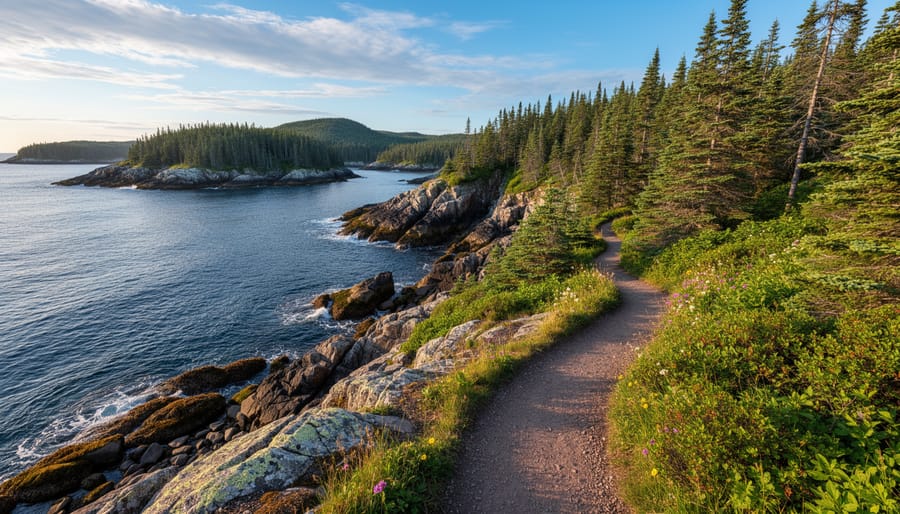
Terra Nova National Park draws outdoor enthusiasts for reasons that go well beyond its 400 square kilometres of protected coastline. While a Fraser River tour offers stunning waterside perspectives closer to home, Terra Nova delivers a rare combination of accessible coastal experiences and true wilderness that few Canadian parks can match.
The park’s maritime boreal forest ecosystem is genuinely unique. This coastal meeting point of land and sea supports dense stands of black spruce and balsam fir that roll right down to rocky shorelines and sheltered fjords. That transition zone creates exceptional wildlife habitat. Moose browse on aquatic plants in roadside ponds, black bears forage along berry-rich trails, and seabirds nest on offshore islands visible from coastal lookouts. You can spot all three in a single morning without venturing far from established paths.
For families, Terra Nova stands out among national parks because its best features require minimal hiking effort. Boardwalk trails reach dramatic coastal viewpoints in under thirty minutes, and interpretive programs explain the ecosystem without demanding backcountry skills. Kids can explore tide pools, paddle protected coves, and sleep comfortably at developed campgrounds.
Experienced wilderness seekers find what they need, too. Backcountry campsites at Blue Hill Pond offer genuine solitude, multi-day kayaking routes thread through Newman Sound’s network of islands and inlets, and inland trails penetrate old-growth forest where you might go hours without seeing another person.
This range matters. Most coastal parks lean heavily toward either family accessibility or serious wilderness, rarely both. Terra Nova delivers the maritime scenery and wildlife encounters that define Atlantic Canada, but shapes the experience to match your skill level and available time.
Top Areas and Attractions to Explore
1. Newman Sound and Coastal Trail Network
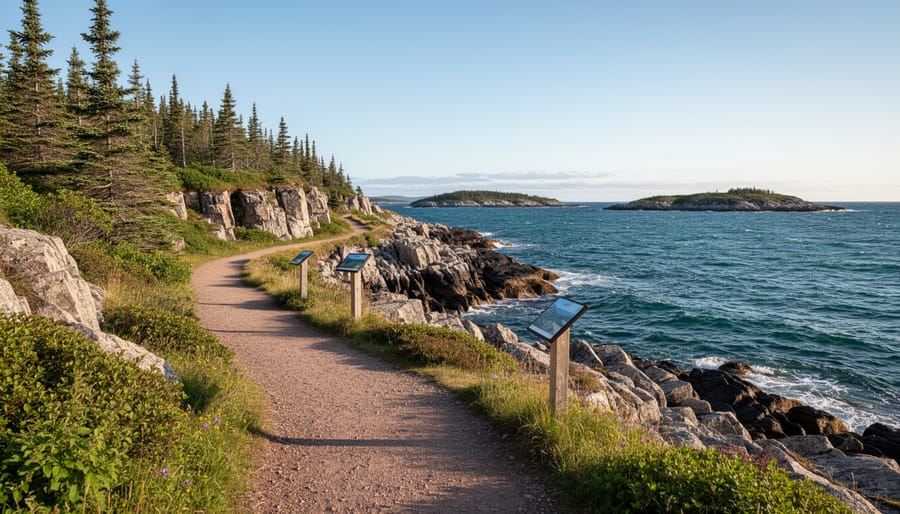
Newman Sound forms the centerpiece of Terra Nova’s coastal experience, offering a trail network that accommodates everyone from families with strollers to serious hikers. The Coastal Trail follows the sound’s shoreline, weaving through maritime boreal forest before opening onto dramatic clifftop viewpoints where the Atlantic meets sheltered inlets.
The Southwest Brook Trail provides an accessible introduction to the area with its well-maintained boardwalk sections, allowing wheelchair users and those seeking accessible parks experiences to enjoy close encounters with the coastal ecosystem. You’ll pass through tucked-away coves and forested sections where moose tracks are common in soft ground.
Wildlife activity peaks during early morning and evening hours. Black bears occasionally forage along the forest edges, particularly in late summer when berries ripen. Bald eagles perch in dead spruce overlooking the water, while harbor seals surface in the sound itself. Bring binoculars for the best viewing.
The trails shine brightest during shoulder season, late May through mid-June, and September into early October. You’ll dodge peak summer crowds while catching migrating seabirds or autumn foliage without the bugs that plague July and August. Morning fog often burns off by mid-morning, revealing the full scope of these coastal views.
2. South Broad Cove Campground and Beach Area
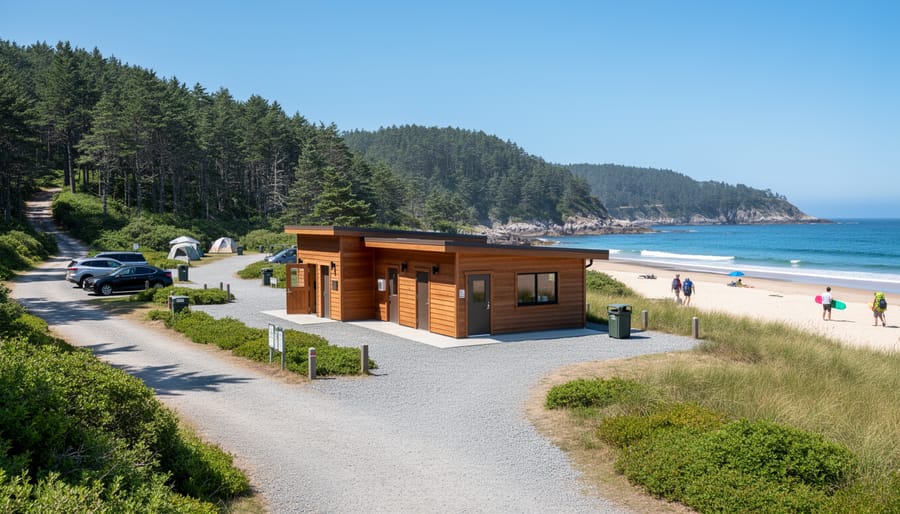
South Broad Cove serves as Terra Nova’s main basecamp, offering the park’s largest and most accessible camping area alongside a sheltered saltwater beach. The campground features 378 sites spread across wooded loops, with options ranging from unserviced tent sites to full-hookup RV pads. Hot showers, flush toilets, and a laundromat make this area particularly welcoming for families and those new to national park camping.
The campground’s real draw is its location. You’re steps from the beach where kids can safely explore tidal pools at low tide, and several major trailheads sit within easy walking distance. The Coastal Trail begins right from the campground, while Newman Sound’s kayak launch is nearby for paddlers wanting to explore the fjord’s calm waters.
What makes South Broad Cove ideal for first-timers is the support infrastructure. There’s a small visitor center during peak season, a playground for restless children, and interpretive programs that run from the outdoor theatre. The sites themselves offer decent privacy despite the campground’s size, with enough tree cover to feel like you’re in the forest rather than a parking lot. Bear-proof food lockers come standard at each site.
Cell service is spotty but available in patches, and the campground accepts reservations through Parks Canada’s booking system, essential for July and August weekends when sites fill quickly.
3. Malady Head Trail and Lookout
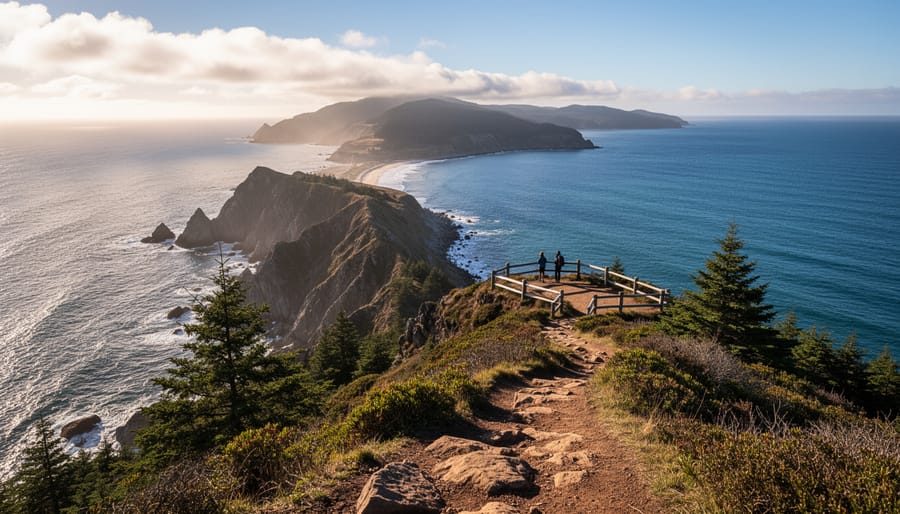
The Malady Head Trail stands out as one of Terra Nova’s most rewarding coastal hikes, delivering sweeping ocean views after a moderately challenging climb. The 5.3-kilometer loop takes most hikers between two and three hours to complete, with the final ascent to the lookout offering the payoff: panoramic vistas across Newman Sound and the jagged coastline stretching toward the open Atlantic.
This trail earns its “moderate” rating from sustained elevation gain and some uneven, rocky terrain. You’ll navigate forested sections with tree roots crossing the path before emerging onto exposed headland where the wind picks up considerably. Sturdy hiking boots are essential, the rocks can be slippery after rain or morning dew.
Pack water, snacks, and layered clothing regardless of the forecast. The exposed lookout can be ten degrees cooler and significantly windier than the trailhead, even on calm summer days. Bug spray helps during June and early July when blackflies are active in the forested sections.
The trail isn’t accessible for wheelchairs or strollers due to the steep sections and natural obstacles. Visitors with mobility concerns should explore the park’s coastal boardwalks instead, which offer similar ocean scenery with level, maintained surfaces. Anyone attempting Malady Head should be comfortable with sustained uphill hiking and rocky footing.
4. Sandy Pond and Inland Forest Trails
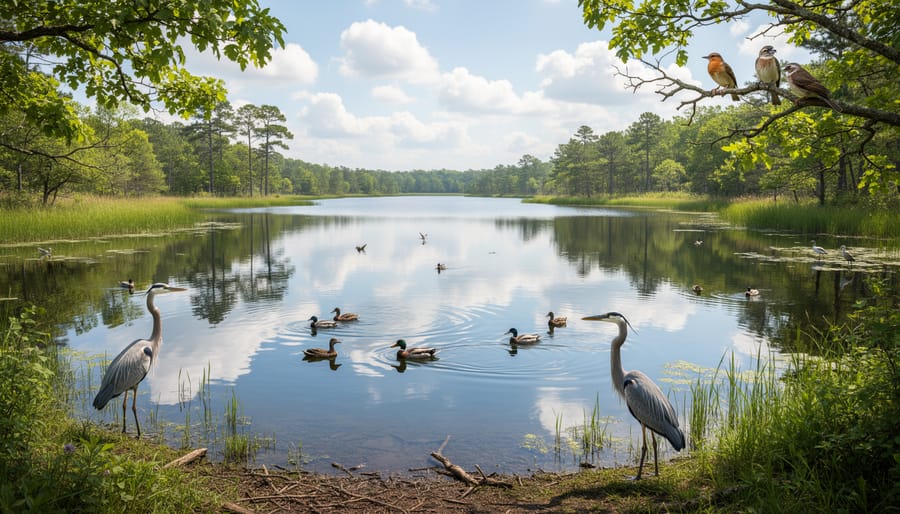
Sandy Pond offers a stark contrast to Terra Nova’s dramatic coastline. Tucked inland among dense stands of balsam fir and black spruce, this calm freshwater body sits surrounded by the boreal forest that defines much of Newfoundland’s interior. The trails here wind through moss-carpeted woodland where the soundtrack shifts from crashing waves to rustling leaves and bird calls.
The loop trail around Sandy Pond spans roughly 3 kilometres of easy walking on well-maintained paths. You’ll cross boardwalks over wetland sections where pitcher plants thrive in the acidic soil. Spring and early summer bring migrating warblers, while resident chickadees and boreal species like gray jays appear year-round. Bring binoculars, the open water attracts loons and ducks that you won’t spot along the coastal trails.
What sets this area apart is the quiet. While Newman Sound draws most visitors, Sandy Pond sees lighter traffic, especially midweek. The forest canopy creates a different atmosphere: cooler, more enclosed, with filtered light playing through the evergreens. It’s ideal if you’re seeking solitude or want to understand the inland ecosystem that once covered most of the island before coastal settlement. The pond itself invites contemplation from several shoreline access points where you can sit and simply watch the water.
5. Blue Hill Pond and Backcountry Sites
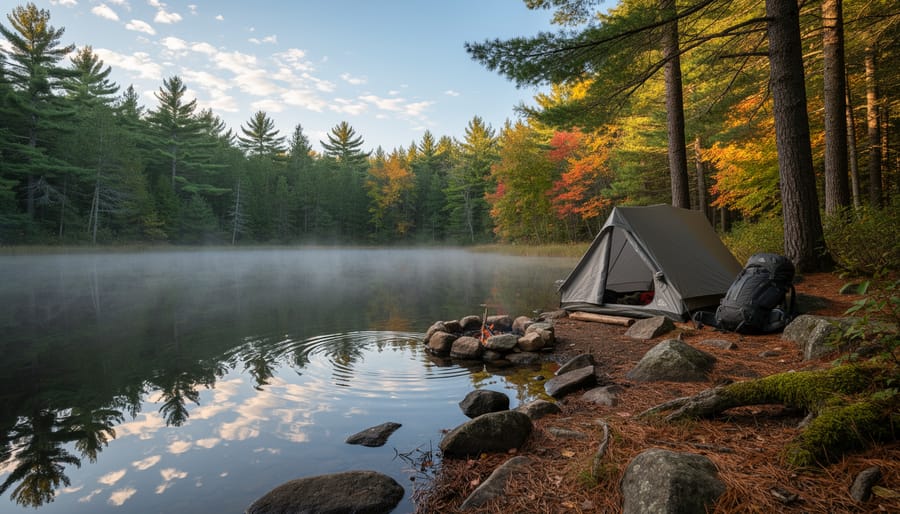
Blue Hill Pond offers Terra Nova’s most remote backcountry experience, where thick boreal forest gives way to a secluded pond ringed by ancient spruce and birch. This area is designed for self-sufficient campers comfortable with wilderness navigation and Leave No Trace principles. The primitive campsites here see a fraction of the traffic found at South Broad Cove, rewarding those willing to hike in with genuine solitude and immersive wildlife encounters.
Reaching Blue Hill Pond requires a moderately challenging hike of several kilometers along forest trails that can be muddy and uneven, particularly after rain. You’ll need to carry all gear, food, and water purification equipment. The sites themselves are basic: cleared tent pads, bear-safe food storage, and minimal facilities. Registration at the park office is mandatory, and backcountry camping requires the standard park entry permit plus overnight fees.
What makes this area worth the effort? The stillness. At dawn, mist lifts off the pond while loons call across the water. Moose frequently feed along the shoreline. The night sky, far from any light pollution, reveals stars rarely visible near populated areas. Pack a water filter, insect repellent for blackflies, and layers for temperature swings. Check trail conditions when you call 1-877-737-3783 before heading out, as wet conditions can make access challenging for even experienced hikers.
6. Marine Discovery Program Area
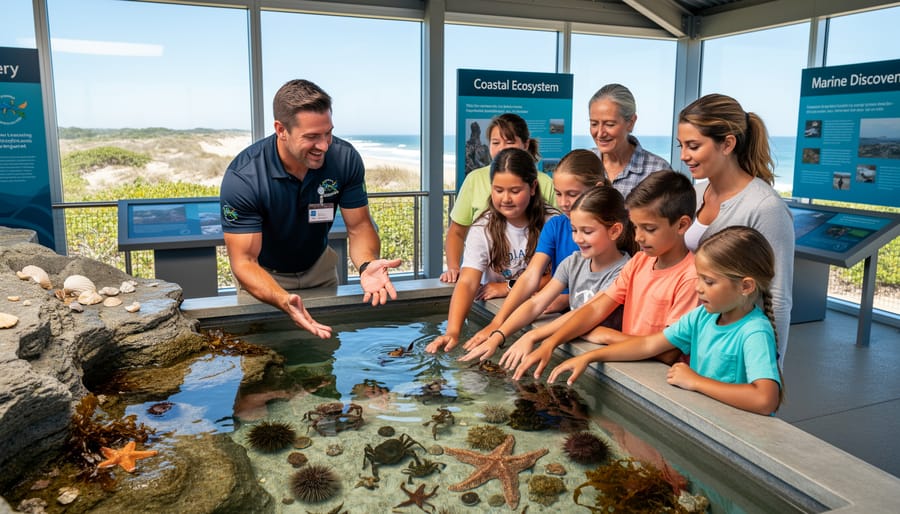
The Marine Discovery Program Area serves as Terra Nova’s hub for understanding the complex interactions between land and sea that define this coastal national park. When interpretive programs run during the operating season, park staff lead hands-on explorations of tide pools, rocky shorelines, and marine habitats that reveal the surprising diversity of life in these cold Atlantic waters.
Touch tanks and guided beach walks typically focus on the invertebrates, seaweeds, and fish species that thrive in the intertidal zones. You might examine sea stars, crabs, periwinkles, and other creatures that adapt to twice-daily shifts between submersion and exposure. These programs help visitors grasp how the boreal forest ecosystem connects to the marine environment through nutrients, shelter, and wildlife corridors.
The area also interprets broader marine topics: how ocean currents shape the coast, why Newfoundland’s waters support such rich fisheries, and what climate patterns mean for species distribution. Some programming covers human connections to the sea, from traditional fishing practices to modern conservation efforts.
Availability varies by season and staffing, so check with park information at 1-877-737-3783 before your visit if marine programs interest you. Even without scheduled activities, interpretive panels along coastal trails explain marine ecology basics, and low tide offers prime self-guided exploration of tide pools near accessible beach areas.
7. Outport Trail and Cultural Heritage Sites
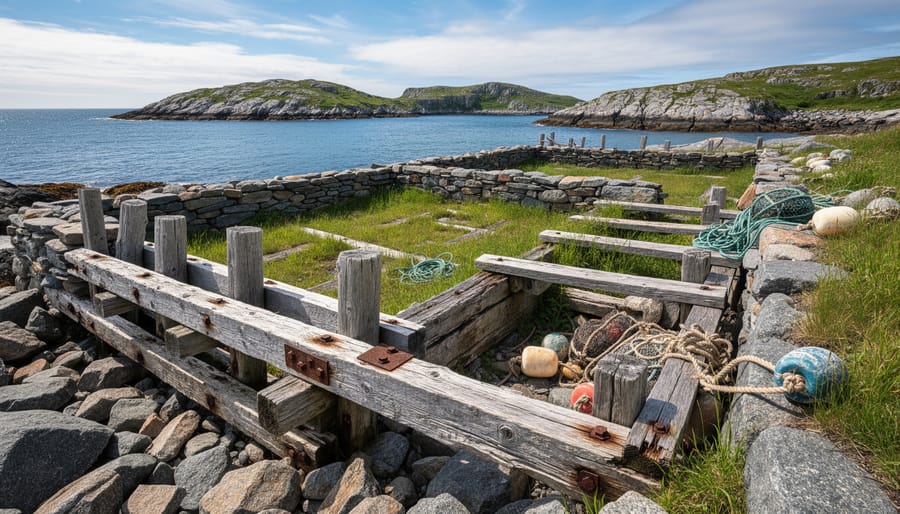
The Outport Trail offers a window into Newfoundland’s coastal settlement history, winding through the remains of communities that thrived here before the park’s establishment in 1957. This 5-kilometer loop takes you past foundation stones, cellar depressions, and clearings where families once fished, farmed, and built their lives in isolation from mainland infrastructure.
Walking the trail, you’ll encounter interpretive panels explaining how outport residents survived through fishing, subsistence gardening, and resourcefulness in an unforgiving climate. The path crosses former gardens where rhubarb and daylilies still bloom decades after the last residents departed, resilient reminders of domestic life. Stone walls and rotting wharf pilings mark where boats launched daily to fish the sound.
The trail’s middle section passes through abandoned orchards and reaches the shoreline where fish stages once stood. Look for square nails, pottery shards, and glass fragments in the soil, artifacts that contextualize the interpretive signage. The experience is self-guided and contemplative rather than heavily programmed, allowing you to piece together these communities’ stories at your own pace.
Plan two to three hours for the full loop, longer if you stop to examine ruins closely. The terrain is uneven with some wet sections, so waterproof boots help. This trail reveals a layer of Terra Nova that purely natural areas cannot: the human dimension of surviving and ultimately leaving this beautiful but demanding coastline.
Practical Information for Your Visit
Seasonal Access and Operating Hours
Terra Nova operates on a defined seasonal schedule, with the park is open May 15 through October 12 each year. This window captures Newfoundland’s most favorable weather while the park’s full facilities and services remain staffed. Arriving during the early or late weeks of the season means fewer crowds and quieter trails, though you’ll want to prepare for cooler temperatures and the possibility of rain or fog, common along this coastline even in summer months.
Shoulder-season visitors should pack extra layers and waterproof gear, as conditions shift quickly near the Atlantic. Some interpretive programs and facilities may operate on reduced schedules at the season’s edges, so calling the park information line at 1-877-737-3783 before your trip confirms what’s currently available. Staff can tell you about trail conditions, wildlife activity, and whether specific campgrounds or services are open for your planned dates, which proves especially helpful if you’re driving several hours to reach the park.
Fees, Permits, and Passes
Terra Nova requires every visitor to hold a valid park entry permit before exploring its trails and facilities. Daily fees run C$5.80 for adults, C$4.90 for seniors (65+), C$2.90 for children ages 6 to 16, and C$15 for a family group (up to seven people arriving in one vehicle). Kids under six enter free.
If you’re planning multiple visits or combining Terra Nova with other Parks Canada sites, an annual Discovery Pass makes better financial sense. Individual adult passes cost roughly C$29, while a family pass runs about C$74, breaking even after just five days compared to daily permits.
Camping fees come on top of entry permits and vary by site type. Frontcountry campgrounds with facilities charge more than backcountry sites, though exact rates shift slightly each season. Purchase your park entry permits and fees at the park gate during operating hours (May 15 through October 12) or online before arrival to skip the queue. Keep your permit displayed on your vehicle dashboard while you’re in the park, wardens do check, especially at trailheads and campgrounds.
Getting There and Accessibility
Terra Nova National Park sits along the Trans-Canada Highway (Route 1) on Newfoundland’s east coast, roughly 240 kilometers north of St. John’s and about 80 kilometers south of Gander. The main park entrance is clearly marked from the highway, with ample parking at visitor centers, trailheads, and campgrounds throughout the park. Most parking areas accommodate standard vehicles, RVs, and vehicles with trailers, though some backcountry trailheads have limited space during peak summer weekends.
For visitors requiring mobility-friendly facilities, the Newman Sound Day Use Area and South Broad Cove offer paved paths, accessible washrooms, and designated parking. Several shorter boardwalk trails near these areas provide coastal views without steep grades or challenging terrain. The visitor center features accessible entrances and exhibits. When planning your visit, call 1-877-737-3783 to confirm current accessibility features for specific trails or facilities, as conditions and available services can vary seasonally. Note that cell service is spotty throughout the park, so download maps and information before arriving.
Local Tips and Insider Knowledge
Early mornings before 8 a.m. offer the best chances for moose and black bear sightings along Newman Sound trails, when animals are most active and crowds are minimal. Pack binoculars for distance viewing, you’ll want to keep at least 100 meters from wildlife. The same patient observation skills useful for wildlife spotting along local waterways apply here, though Terra Nova’s creatures are less habituated to humans.
For quieter experiences, skip the main campground on weekends and head to Sandy Pond or inland trails where day-trippers rarely venture. The Outport Trail sees minimal traffic after 3 p.m., perfect for photographers seeking golden hour light on the coast. Cell service is nonexistent beyond the visitor center, so download offline maps and trail guides before entering. Stock up on supplies in Glovertown or Port Blandford rather than relying on limited park facilities. Insect repellent is essential June through August when blackflies and mosquitoes peak. If camping, bring extra tent stakes, coastal winds can gust unexpectedly at night, especially near exposed sites like South Broad Cove.
Frequently Asked Questions
Visitors planning a trip to Terra Nova often have similar questions about logistics, safety, and what to expect. Here are answers to the most common concerns.
When is the best time to visit Terra Nova National Park?
The park operates from May 15 to October 12, with peak season running July through August when all facilities are open and weather is warmest. June and September offer fewer crowds and pleasant hiking conditions, though some services may be limited.
Do I need experience to hike and camp at Terra Nova?
The park caters to all skill levels, from accessible coastal boardwalks perfect for families to challenging backcountry routes requiring navigation skills. Most popular trails like Newman Sound are moderate and well-marked, making them suitable for beginners with reasonable fitness.
What should I pack for a Terra Nova visit?
Bring layered clothing for changeable coastal weather, rain gear regardless of forecast, sturdy waterproof hiking boots, insect repellent for blackflies (especially June and early July), and bear spray for backcountry areas. Cell service is spotty, so download maps beforehand.
How do I reserve camping at Terra Nova?
Contact the park at 1-877-737-3783 for current reservation procedures and availability, as booking systems can vary by season. Backcountry permits require advance registration, while some frontcountry sites at South Broad Cove accept first-come arrangements during shoulder season.
Wildlife encounters, particularly with moose and black bears, are common at Terra Nova. Make noise on trails, keep food secured in vehicles or bear-proof containers at campsites, and maintain at least 30 meters distance from any wildlife. Moose are surprisingly fast and can be aggressive if approached, especially cows with calves. The park’s coastal location means weather can shift rapidly, fog, wind, and rain are possible even in summer, so check conditions before heading out on longer hikes or paddling excursions.
Terra Nova National Park offers Westminster Outdoors readers a destination that delivers authentic wilderness experiences unavailable in our local green spaces. The combination of coastal trails, boreal forest ecosystems, and genuine wildlife encounters makes the journey to Newfoundland worthwhile for outdoor enthusiasts seeking something beyond day hikes. Whether you’re drawn to accessible boardwalks along Newman Sound or backcountry camping at Blue Hill Pond, the park accommodates various skill levels and trip styles.
Plan your visit carefully around the May 15 to October 12 operating season, as facilities and services operate within this window. Call 1-877-737-3783 before you go to confirm current trail conditions, camping availability, and any weather-related closures that might affect your plans. With proper preparation and realistic expectations about the remote location, Terra Nova rewards visitors with the kind of immersive natural experience that reminds us why protecting wild spaces matters.