
Accessibility in New Westminster’s parks means finding spaces where mobility aids move freely on paved paths, where accessible washrooms are actually available, and where everyone can experience nature without barriers stopping them at the trailhead. The good news: several parks in the city deliver genuine accessibility, from Westminster Pier Park’s waterfront boardwalk to Moody Park’s wide, flat pathways and accessible playground. The reality is more nuanced than a simple “wheelchair-friendly” label, though, because accessibility features vary widely. Some parks offer fully paved loops perfect for wheelchairs and walkers, while others have accessible entry points but quickly transition to gravel or uneven terrain.
Understanding what accessibility really means for your specific needs makes the difference between a frustrating outing and a genuinely enjoyable park visit. Accessible parking, smooth path surfaces, rest areas with benches, and functional washroom facilities matter as much as the scenery itself. New Westminster has made real progress in recent years, upgrading facilities and designing new spaces with universal access in mind. This guide cuts through vague promises to show you exactly what each park offers, which hidden accessible gems deserve your attention, and how to plan visits that work for your mobility requirements in 2026.
What Makes a Park Truly Accessible
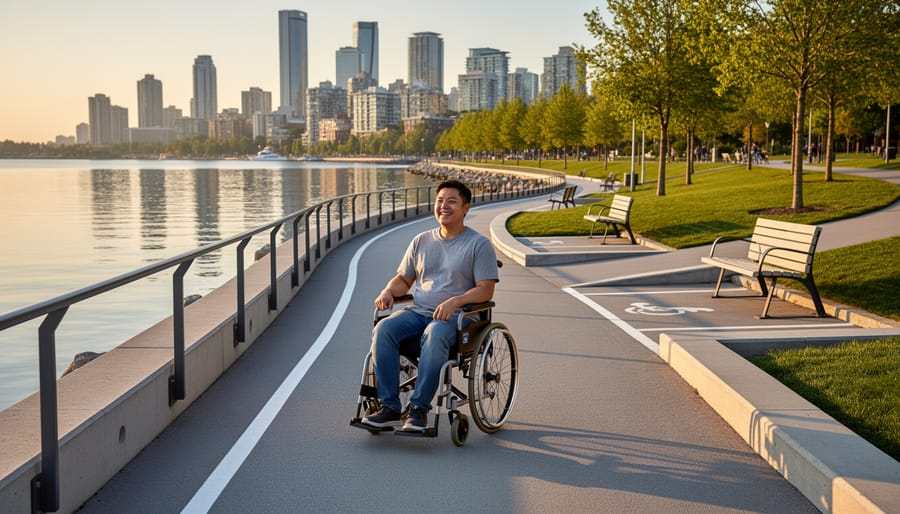
True park accessibility means everyone can arrive, navigate, use facilities, and enjoy the space with dignity and independence. It goes far beyond a single ramp or a token accessible parking spot.
Pathways matter most. Firm, stable surfaces (concrete, asphalt, or compacted gravel) allow wheelchair users and people with mobility aids to move confidently. Paths should be at least 1.2 metres wide with minimal cross-slopes, gentle grades under five percent, and clear sightlines. Abrupt level changes, loose gravel, or muddy sections block access entirely.
Parking and arrival set the tone. Accessible stalls need to be close to park entrances, properly marked, and equipped with adjacent loading zones. The route from car to park must be barrier-free, with curb cuts and clear signage pointing toward accessible entrances and features.
Washrooms are non-negotiable. Accessible restrooms with wide doors, grab bars, adequate turning radius, and accessible sinks transform a park visit from stressful to enjoyable. Portable units rarely meet true accessibility standards.
Seating and rest areas provide inclusion. Benches with back support and armrests at varied heights, placed along paths at regular intervals, benefit people with limited stamina, balance challenges, or chronic pain. Shaded seating matters year-round.
Sensory considerations broaden access further. Visual contrast on path edges helps people with low vision. Quiet zones benefit those with sensory sensitivities. Tactile elements and auditory cues support visitors who are blind or have cognitive disabilities.
Recreation features should follow play area accessibility guidelines ensuring ground-level play components, accessible swings, transfer platforms, and sensory-rich equipment that welcomes all abilities.
True accessibility means a person using a wheelchair, pushing a stroller, managing low vision, or navigating autism can experience the park fully, not just technically enter it.
New Westminster’s Most Accessible Parks
Westminster Pier Park and Waterfront Gems
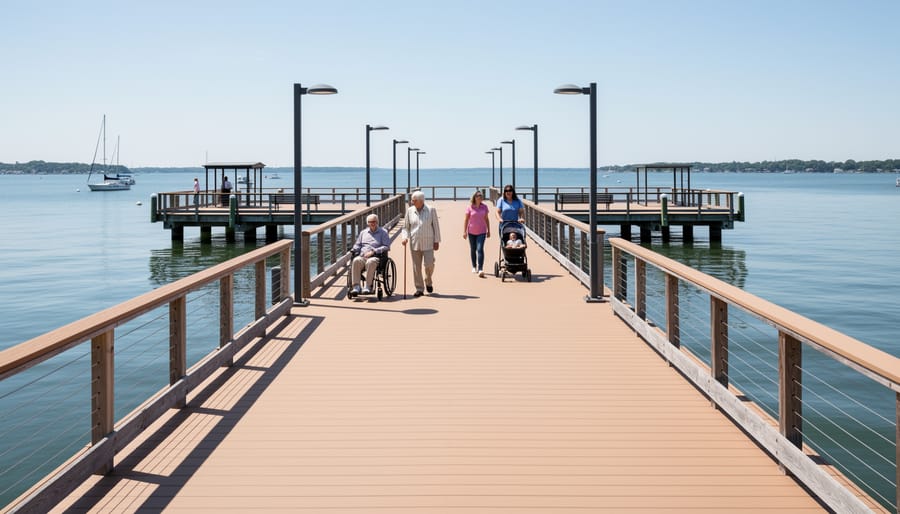
Westminster Pier Park stands as New Westminster’s flagship accessible waterfront destination, and it genuinely delivers on that promise. The entire boardwalk features smooth, wide pathways with gradual grades that wheelchair users and those using mobility aids can navigate confidently. You’ll find multiple accessible entry points from the parking area, each with level transitions and clear signage.
The accessible fishing pier deserves special mention. It offers lowered railings, knee clearance for wheelchair users, and a textured surface that provides excellent traction even in wet conditions. Several benches with back support line the pier at regular intervals, giving visitors comfortable rest spots with stunning river views.
Adjacent waterfront parks including Tipperary Park and the Fraser River Discovery Centre plaza maintain these high accessibility standards. Level terrain throughout means no sudden slopes or obstacles, and the paved surfaces remain smooth year-round. Accessible washrooms at Westminster Pier Park include adult change tables and companion seating, a rare feature that makes extended visits feasible for families with complex care needs.
Parking presents another accessibility win. Designated accessible stalls sit immediately adjacent to park entrances, eliminating long pushes or rolls from distant lots. The waterfront pathway system connects seamlessly, allowing visitors to explore over a kilometer of riverfront without encountering stairs or barriers. During summer months, accessible picnic tables with extended tops accommodate wheelchairs comfortably, making this area ideal for outdoor gatherings that truly include everyone.
Neighborhood Parks with Universal Design
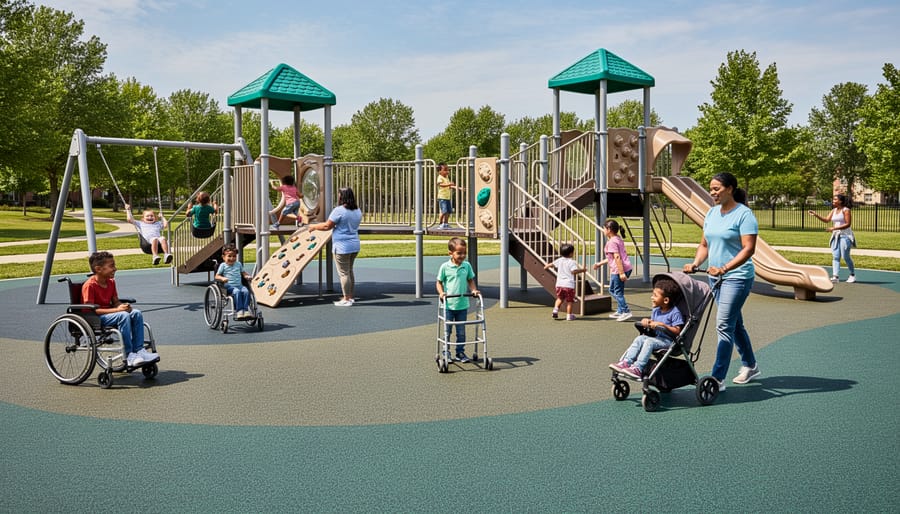
New Westminster’s neighborhood parks are leading the way in universal design, creating spaces where families of all abilities can play together without barriers or segregation.
Hume Park stands out with its fully accessible playground featuring ramp access, ground-level play panels, and sensory-rich equipment including musical elements and textured surfaces. The park’s paved pathways connect the playground to picnic areas and washrooms, all designed with wide clearances and firm, stable surfaces. Accessible parking sits steps from the entrance, and the gentle terrain makes exploring the entire park manageable for wheelchair users and those using mobility aids.
Moody Park delivers inclusive recreation with an accessible playground that incorporates wheelchair-accessible swings, transfer platforms for slides, and inclusive merry-go-rounds designed for children of varying abilities to play side by side. The park’s pathways are smooth asphalt with curb cuts at every intersection, and accessible washrooms near the playground mean families can spend extended time without worry. Covered picnic shelters provide respite and gathering spaces within easy rolling distance.
Queens Park offers accessible sections including paved pathways through its rose garden and level access to playground areas with inclusive equipment. While some historic areas present challenges, the park’s accessible routes connect key amenities including washrooms, parking, and picnic facilities.
These community parks prove that thoughtful design creates genuinely welcoming spaces where accessibility features enhance everyone’s experience rather than feeling like afterthoughts.
Hidden Accessible Trails and Nature Spaces
Beyond the well-known parks, New Westminster hides several accessible nature spots that wheelchair users and visitors with mobility aids can genuinely enjoy. Glenbrook Ravine Park offers a paved pathway through its northern section with minimal grade changes, providing tree-canopy shade and creek views without the steep terrain found elsewhere in the park. Moody Park’s perimeter path creates a peaceful 0.8-kilometer loop on firm asphalt, circling mature trees and open lawn areas with frequent benches for rest stops.
The pathway along Tipperary Park follows the Fraser River with packed gravel surfaces firm enough for most wheelchairs, especially during dry months. While less maintained than urban boardwalks, this 600-meter stretch rewards visitors with riverside bird-watching and quieter waterfront access. Queens Park’s rose garden area features wide, level pathways connecting accessible viewpoints of seasonal blooms, a sensory experience often overlooked by those focused on the park’s hillier sections. These spaces prove that accessibility and natural beauty can coexist in unexpected places.
Parks with Room for Improvement
Not every park in New Westminster offers the same level of accessibility, and it’s important to know what you’re getting into before you go. Several parks have significant barriers that make them challenging or impossible for wheelchair users and people with limited mobility.
Moody Park presents a mixed picture. The paved pathways around the perimeter work well, and the accessible washrooms near the community centre are reliable. However, the sloped terrain toward the back of the park creates steep sections that can be difficult to navigate independently. The playground area has woodchip surfacing that doesn’t accommodate wheelchairs effectively.
Queens Park’s historic design includes stairs, steep hills, and gravel paths throughout much of its sprawling grounds. The petting zoo and rose garden areas involve elevation changes that present real challenges. The accessible entrance near the parking lot leads to a limited flat section, but exploring beyond that requires assistance or considerable effort.
Grimston Park and Tipperary Park both feature primarily grass surfaces and uneven terrain. While you can access the edges from sidewalks, moving through these neighborhood parks on wheels proves difficult, especially after rain when the ground becomes soft.
If you’re considering these parks, call ahead to ask about specific routes or bring someone who can assist. Sometimes accessing just one corner or feature makes the trip worthwhile, but understanding the limitations helps you plan realistically rather than arriving disappointed.
Planning Your Accessible Park Visit
Before heading out, call ahead or check the city’s park website to confirm current conditions, recent rain can make unpaved sections muddy, and maintenance work might temporarily close accessible routes. New Westminster’s Parks and Recreation department maintains updated facility information at 604-527-4567, and their website lists which washrooms are open and whether accessible parking spots are available.
Pack essentials based on your needs: sunscreen and water in summer, extra layers in cooler months, and a fully charged phone with the city’s contact information saved. If you’re visiting waterfront parks during high tide, pathways near the river may have puddles or spray, so waterproof clothing helps. Winter brings its own challenges, some parks clear snow from main pathways, but others don’t, making them temporarily inaccessible.
For parking, arrive early on weekends when accessible spots fill quickly, especially at Westminster Pier Park and Queensborough Community Centre. Download the HonkMobile app to pay for accessible parking and extend your time remotely if needed. The city designates accessible spots near park entrances, but construction or events can affect availability.
Real-time park conditions aren’t always online, so joining local Facebook groups like “New Westminster Community Connections” gives you insider knowledge from other park visitors. Fellow users often share recent photos, surface conditions, and accessibility updates that official channels miss. When in doubt, start with shorter visits to test a park’s suitability before committing to longer outings.
Accessible Recreation Programs and Resources
New Westminster Parks and Recreation runs adaptive programs year-round that bring park spaces to life for people with disabilities. The city’s Adaptive Recreation program offers modified swimming lessons, inclusive sports leagues, and accessible nature walks led by trained staff who understand mobility aids and sensory needs. Programs rotate seasonally, spring brings accessible gardening workshops at community parks, while summer features adaptive kayaking at the waterfront.
You can borrow mobility equipment at no cost through the city’s Accessible Equipment Loan Program. Beach wheelchairs with wide tires work on Westminster Pier Park’s boardwalk, and all-terrain wheelchairs handle Hume Park’s gravel paths. Reserve equipment 48 hours ahead by calling the Parks and Recreation office at 604-527-4567.
The city’s website features an Accessibility Guide with detailed park-by-park breakdowns of pathways, washroom locations, and parking. Download individual park accessibility maps before visiting, they’re more current than Google Maps and show exact accessible route options.
Local organizations extend what the city provides. SPARC BC (Social Planning and Research Council) connects families with adaptive equipment suppliers and peer support groups. Disability Alliance BC offers navigation assistance for anyone new to accessing parks with mobility challenges. Fraser Health’s directory lists community programs that use New Westminster parks as meeting spaces, from wheelchair dance classes to adaptive tai chi sessions held in accessible pavilions.
Advocating for Better Park Accessibility
You don’t need to wait for the city to fix accessibility barriers, your voice matters in shaping New Westminster’s parks. When you encounter an issue, report it directly through the city’s online service request system or call 604-527-4567. Be specific: describe the location, the barrier (broken pavement, missing curb cut, inaccessible washroom), and how it affects access.
Attend Parks and Recreation Advisory Committee meetings to share firsthand experiences. These public sessions happen monthly and welcome input on park improvements and accessibility priorities. You’ll find meeting schedules and agendas on the city’s website, and you can submit written comments if you can’t attend in person.
Join public consultations when the city plans park upgrades or new developments. Sign up for the city’s email updates to receive notifications about upcoming projects in your neighborhood. Your feedback during these planning stages directly influences design decisions and budget allocations for accessibility features.
Connect with local disability advocacy groups who coordinate efforts and amplify community voices. Collective feedback carries weight when requesting ramp installations, accessible playground equipment, or improved pathway surfaces. Document barriers with photos and share them through official channels, evidence strengthens requests and helps staff understand the real-world impact on park users with mobility needs.
New Westminster’s parks genuinely welcome everyone who wants to experience nature and outdoor recreation. While not every park offers perfect accessibility, you’ll find thoughtful features across the city, from Westminster Pier Park’s smooth boardwalks to hidden neighborhood gems with paved paths and accessible playgrounds. The city continues improving accessibility through upgrades and community feedback, which means conditions keep getting better.
Your experiences matter. When you discover an accessible route, encounter a barrier, or find a park that works wonderfully for your needs, share that knowledge. Talk to other park users, contact the city’s recreation department, or connect with local accessibility advocates. These conversations help shape future improvements and guide other residents toward parks they can truly enjoy. Every visit you make demonstrates the importance of inclusive outdoor spaces and contributes to building a more accessible New Westminster for everyone.